

Afghan opium cultivation rises sharply despite ban, UN says
Crime · First reported 29 Oct, 07:35 · Updated 04:52
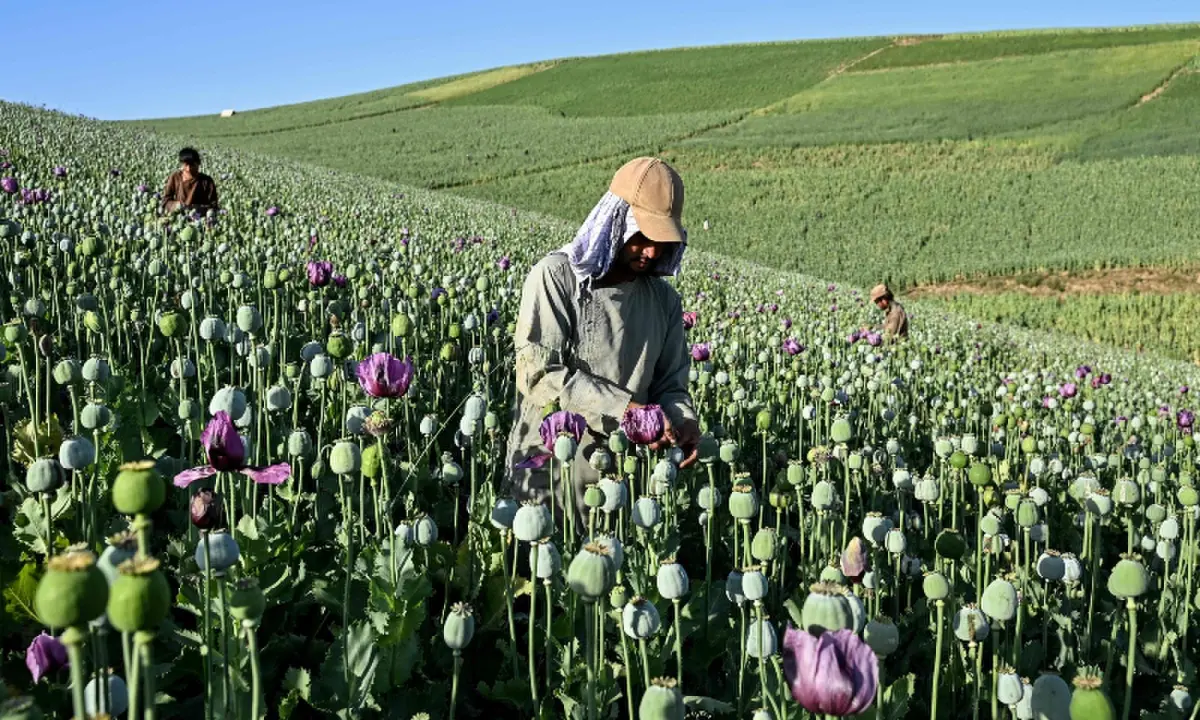
Afghanistan’s opium poppy cultivation more than quadrupled in 2026, reaching 43,000 hectares despite the Taliban government’s ban, according to the UN Office on Drugs and Crime. The report links the increase to farmers’ economic pressures and says sustained alternatives would require broader support, including markets and infrastructure.
- UNODC reported that poppy cultivation rose from 10,000 hectares in 2025 to 43,000 hectares in 2026; estimated opium production increased from 300 to 1,500 tonnes.
- Farmers in Badakhshan described growing poppies because wheat and other alternatives do not provide enough income, while UNODC said alternatives require more than different crops.
- UNODC said its alternative-livelihood approach would require about $500 million, with only 10% funded; it called for market access, infrastructure and international cooperation.
Summary written by Lux AI from 2 articles
Key facts
- Cultivated area
- 43,000 hectares in 2026, up from 10,000 hectares in 2025, according to UNODC.
- Estimated opium production
- 1,500 tonnes in 2026, compared with 300 tonnes in 2025.
- Opium price
- UNODC said the price fell from $570 per kilogram in 2025 to $500 in 2026.
- Alternative-livelihood funding
- UNODC estimated the approach would require about $500 million; 10% had been funded.
Source spectrum
Far left
Left
Lean left


Centre
Lean right
Right
Far right
Left 2 · Centre 0 · Right 0 of 2 rated sources
Images from the coverage

All coverage
Coverage over time
LeftCentreRight
Articles per hour since first reported, by side.
Ownership
- Corporation 50% (1)
- Independent 50% (1)
Share of the 2 sources by owner type.