

Israel’s Election Leaves Government Formation Uncertain
Politics · First reported 30 Oct, 02:56 · Updated 03:54
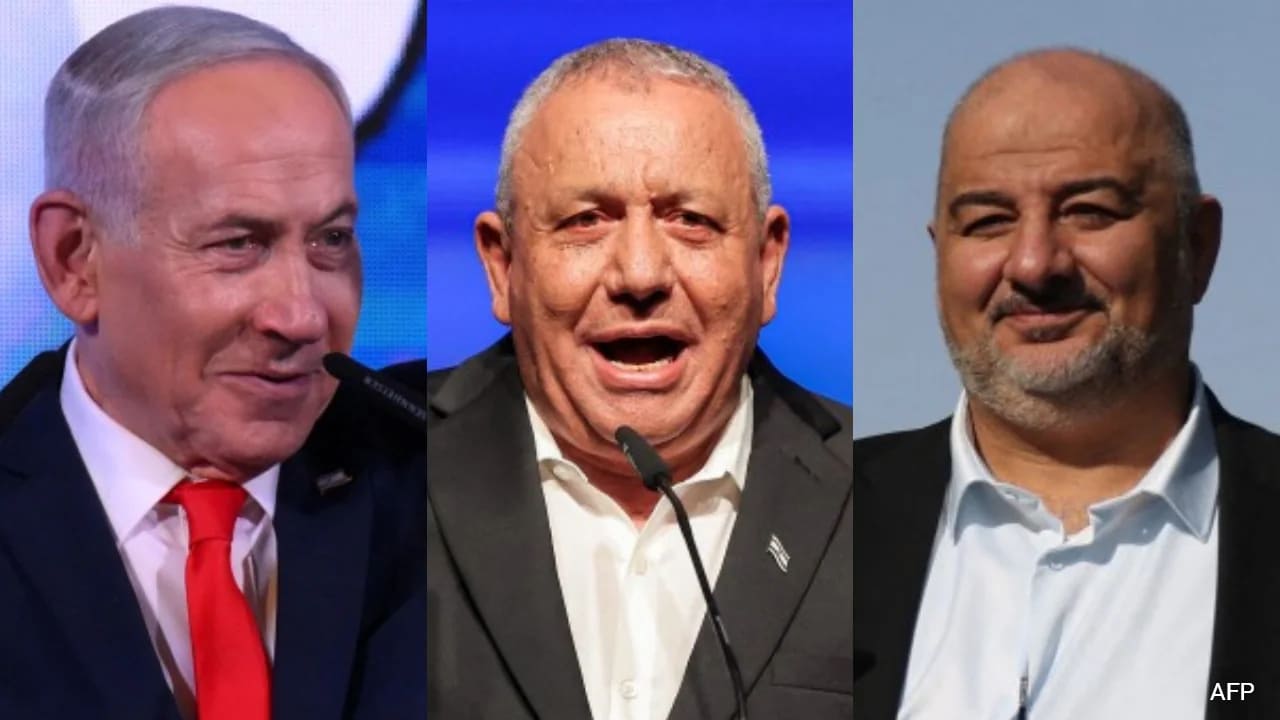
The election has left both major blocs short of a governing majority, setting up potentially lengthy coalition negotiations. Possible outcomes include a unity government, an opposition government supported by Arab parties, defections, or another election.
- Neither Netanyahu’s bloc nor Eisenkot’s opposition bloc has the 61 seats needed for a majority in the 120-seat Knesset.
- The president is to consult party leaders and choose the candidate considered most likely to form a coalition; that candidate gets 28 days, with a possible extension of up to 14 days.
- The supplied coverage describes difficult negotiations that could last weeks and identifies several possible routes out of the deadlock, including a new election.
Summary written by Lux AI from 2 articles
Key facts
- Knesset size
- 120 seats; 61 are required for a majority.
- Coalition-formation period
- The initial period is 28 days, with a possible extension of up to 14 days.
- Possible support for Eisenkot’s bloc
- The article says it could exceed 67 seats with Arab parties.
- Possible defections
- The article estimates Netanyahu would need roughly eight lawmakers from outside his bloc; Eisenkot would need about 13 if he excluded Arab parties.
Source spectrum
Far left
Left
Lean left

Centre

Lean right
Right
Far right
Left 1 · Centre 1 · Right 0 of 2 rated sources
All coverage
Coverage over time
LeftCentreRight
Articles per hour since first reported, by side.
Ownership
- Non-profit 50% (1)
- Corporation 50% (1)
Share of the 2 sources by owner type.