

OpenAI claims three AI research results and turns to academics for examination
AI · First reported 26 Oct, 14:30 · Updated 08:02
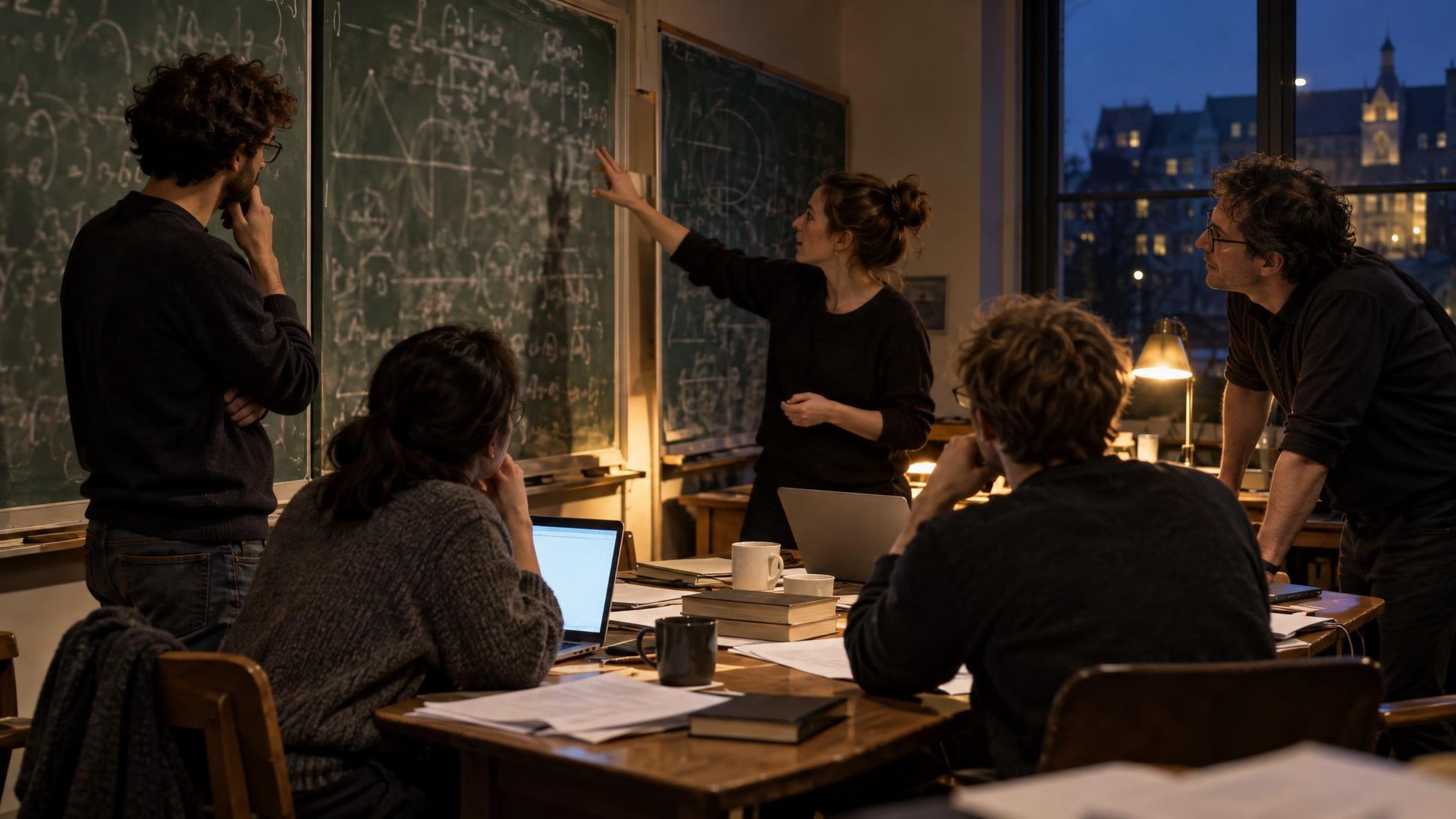
OpenAI says its models produced results in mathematics, computer science and physics, and is trying different ways to help outside researchers examine and explain them. Mathematics and computer science materials are public, while the physics group is preparing its own account before releasing AI-produced materials.
- On October 26, 2026, OpenAI announced three claimed results spanning harmonic analysis, computational complexity and quantum field theory. It describes the manuscripts as research material requiring further interpretation by scientists.
- The company says its models proved the local smoothing conjecture in every dimension, also resolving the Kakeya and Stein restriction conjectures. It released an AI-written explanation and a Lean proof.
- OpenAI says its models disproved the Exponential Time Hypothesis and that the result was verified in Lean. Russell Impagliazzo, Ramamohan Paturi and Ryan Williams will lead outside examination; practical improvements would require further research.
- The physics claim concerns existence proofs for quantum field theories including quantum chromodynamics and a unified completion of the Standard Model. A group led by David Gross is withholding the AI-produced materials while preparing its own writeup.
- OpenAI says collaborators can discuss and publish their conclusions without nondisclosure agreements, and participation is voluntary and unpaid. It acknowledges that selecting the first experts gives some researchers earlier access than others.
Summary written by Lux AI from 6 articles
Key facts
- Announcement
- October 26, 2026.
- Public materials
- Mathematics and computer science AI writeups and Lean proofs.
- Physics release
- AI-produced materials deferred while the outside group prepares its account.
- Research support
- OpenAI cites a previously announced $5 million contribution to the Simons Foundation.
Source spectrum



Left 2 · Centre 5 · Right 0 of 7 rated sources · +3 unrated
Images from the coverage

Background
- An earlier Lux story covered OpenAI’s account of engineers using Codex Ultrafast for incident investigation, security analysis and code refactoring.
- Another earlier Lux story reported headlines describing GPT-6.1 Terra as an upgrade for ChatGPT and Codex, with no further model or availability details supplied.
All coverage
Coverage over time
LeftCentreRight
Articles per hour since first reported, by side.
Ownership
- Unknown 45% (5)
- Corporation 45% (5)
- Government 9% (1)
Share of the 11 sources by owner type.